Today let’s explore authoritarianism with graphic novels and sundry works on 20th century conflicts! None of which seem to have truly left us…
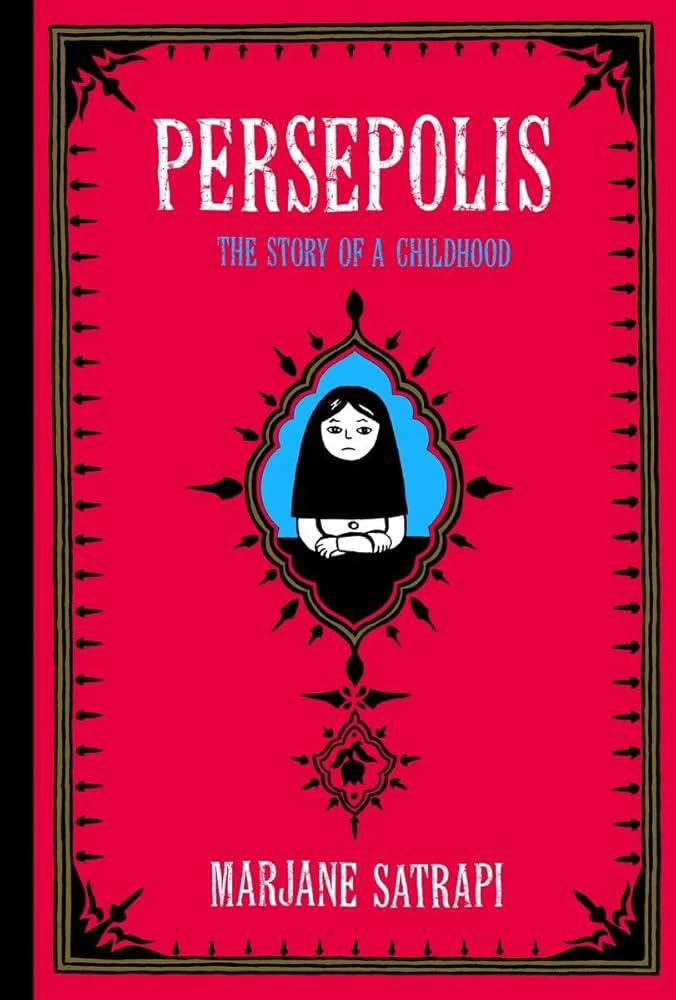
1. “Persepolis: The Story of a Childhood” by Marjane Satrapi (originally published in 2000; this Pantheon English translation debuted in 2003).
When the United States started bombing Iran, I considered an Iran-themed post, which would have featured this work, as well as “Reading Lolita in Tehran” (Nafisi), our aged personal copy of “Poems of Gerard Manley Hopkins” which Kermit Roosevelt II (of Operation Ajax) allegedly gave to his fiancée at Christmas 1936, and “Argo,” which is not a book, though there is a book. It’s the 2012 Ben Affleck thriller about a wild proposal for sneaking hidden American civil servants out of revolutionary Iran.
But I digress. There are a lot of threads to what is happening in Iran at present, and I don’t pretend to understand most of them. But I think you should know, if you don’t, about the suspicious death of Mahsa Amini (AKA Jina or Zhina) by the morality police in 2022. And you should know that a generation before, until she was about 10 in 1980, author Marjane Satrapi didn’t have to wear a veil in Iran at all. “Persepolis” is about everything that changed for her and everyone after the revolution in 1979. (See also: Persepolis II and 2024’s “Woman, Life, Freedom” by Satrapi, et al. The “Persepolis” film debuted in 2007.)
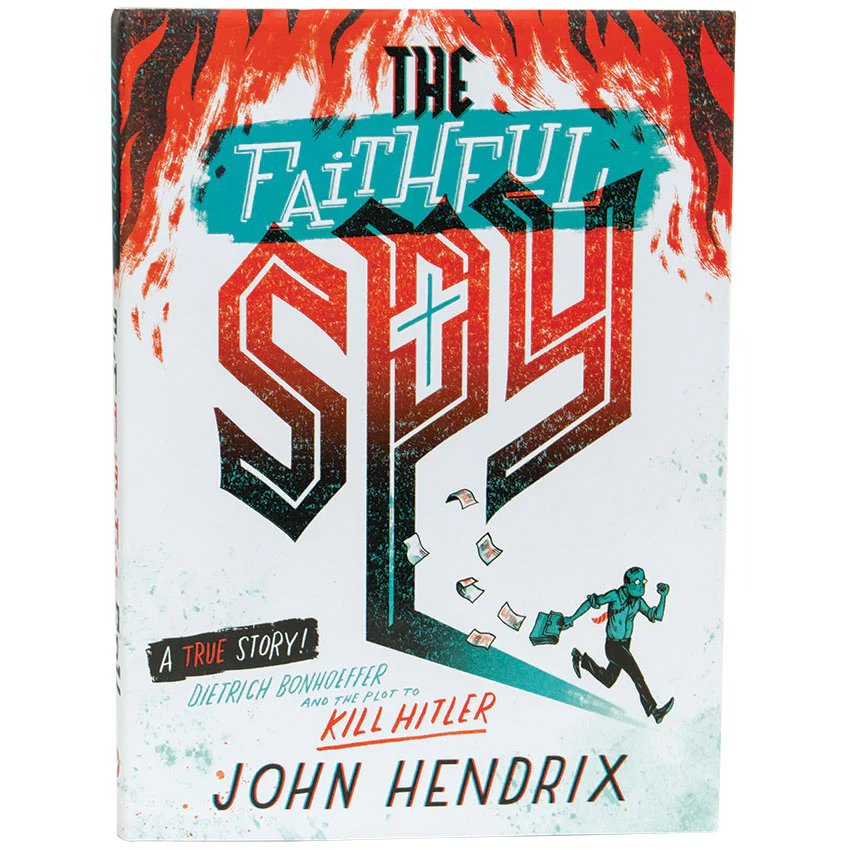
2. “The Faithful Spy: Dietrich Bonhoeffer and the Plot to Kill Hitler” by John Hendrix (Amulet, 2018).
It coincided that while I was reading Bonhoeffer’s “Life Together” for a ministry residency, “Faithful Spy” arrived via aged library request. Bonhoeffer is a wild man; he strains categorization. He’s an academic, then he’s brokering political deals for refugees, and he’s running an underground seminary and being entangled in plots against Hitler. In short, he tried wildly to discern where and how to land as a shepherd in a mad and bloody time.
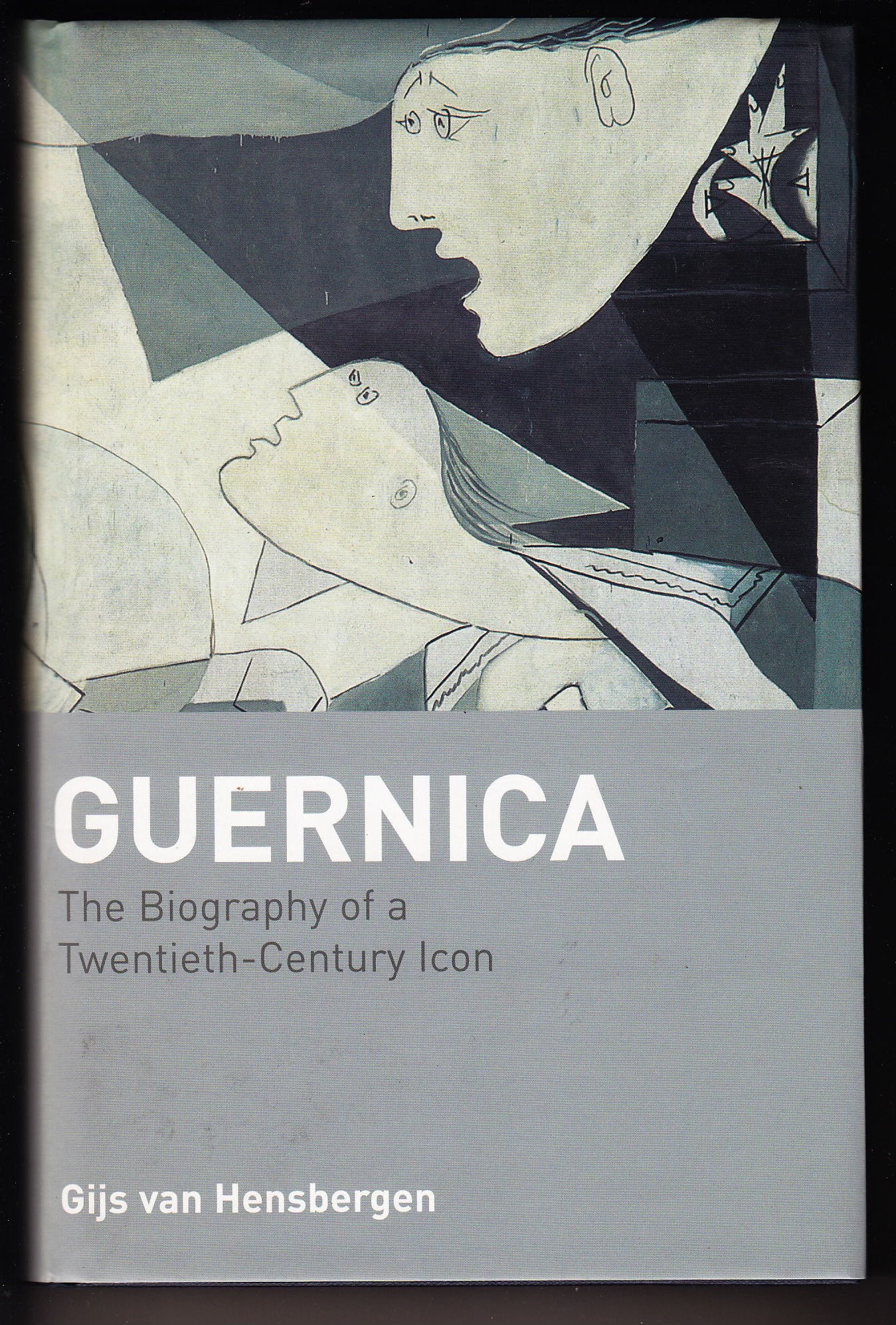
3. “Guernica: Biography of a Twentieth-Century Icon” by Gijs van Hensbergen (Bloomsbury, 2004).
I’ve been trying to become acquainted with the major threads and players of the Spanish Civil War and finding it a struggle. Many forces and players (including the meddling Italians and Germans) muddied the pond. This book was a good high-level overview of the war and its most famous artistic tribute, though I found it rather long and tedious. A great novel that deals with “Guernica” is “Davita’s Harp” by Chaim Potok. I had the privilege of seeing “Guernica” in person in Madrid in 2006. Reading this book also led me to following Orwell essay.
4. “Looking Back on the Spanish War” by George Orwell (published 1943 in “New Road”).
Orwell fought in the War on the Republican side. His reflective essay is hosted by the Orwell Foundation and displays his dissatisfaction with his countrymen in their dealings with the conflict: “Whether the British ruling class are wicked or merely stupid is one of the most difficult questions of our time, and at certain moments a very important question.”
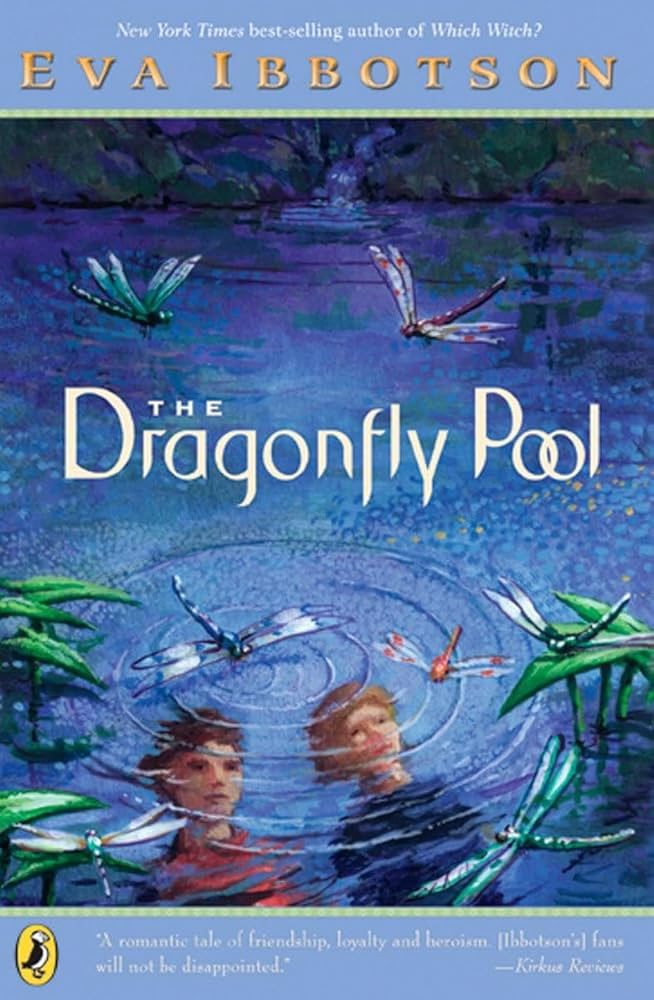
5. “The Dragonfly Pool” by Eva Ibbotson (Dutton/Penguin, 2008).
Another quality read aloud from Ibbotson who favors plucky, young female protagonists forging cross-cultural friendships. This is a school story about unorthodox learning and Nazi resistance (set pre-WWII).
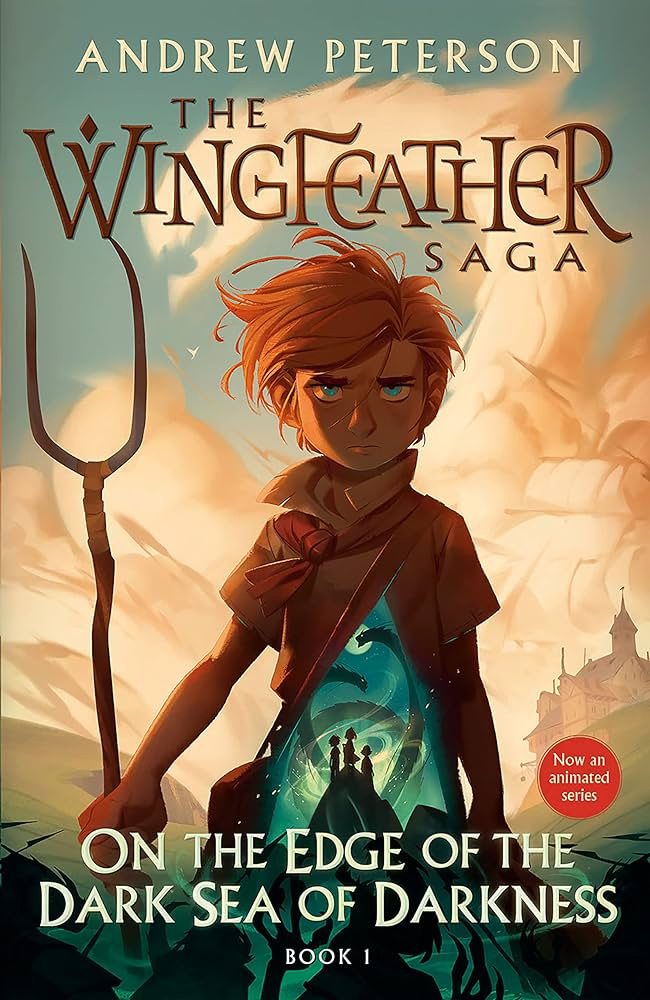
6. “On the Edge of the Dark Sea of Darkness” (Book 1 of 4 of the Wingfeather Saga) by Andrew Peterson (Waterbrook, 2008).
This is the dystopia I didn’t know I needed when I cracked it open one day for a breakfast read aloud. Written by Andrew Peterson – songwriter, artist, gardener, nerd! – it follows the plight of a 5-member family living in an occupied territory as circumstances further rumble. Action! Adventure! Classical education! Dramatic reveals. We’ve just entered the second volume and as with “The Ickabog” (Rowling), I read ahead when my kids aren’t around. Andrew Peterson is the president and artistic director of The Rabbit Room, a Christian community pursuing formation through art.