Welcome back to “What Zoe Read,” my plot to get more people reading and talking about books!
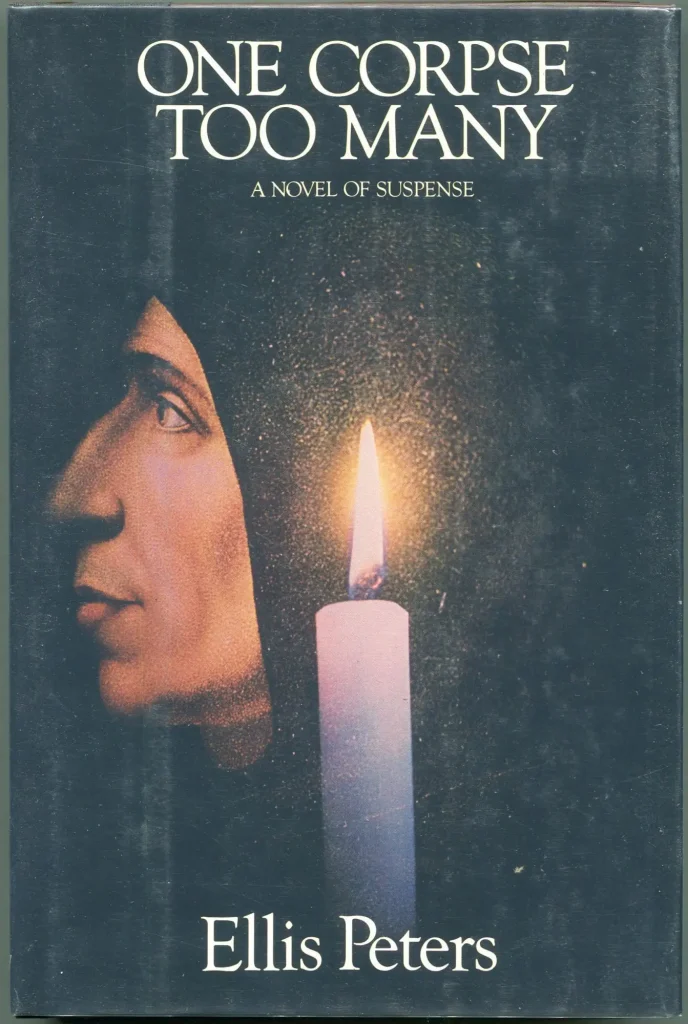
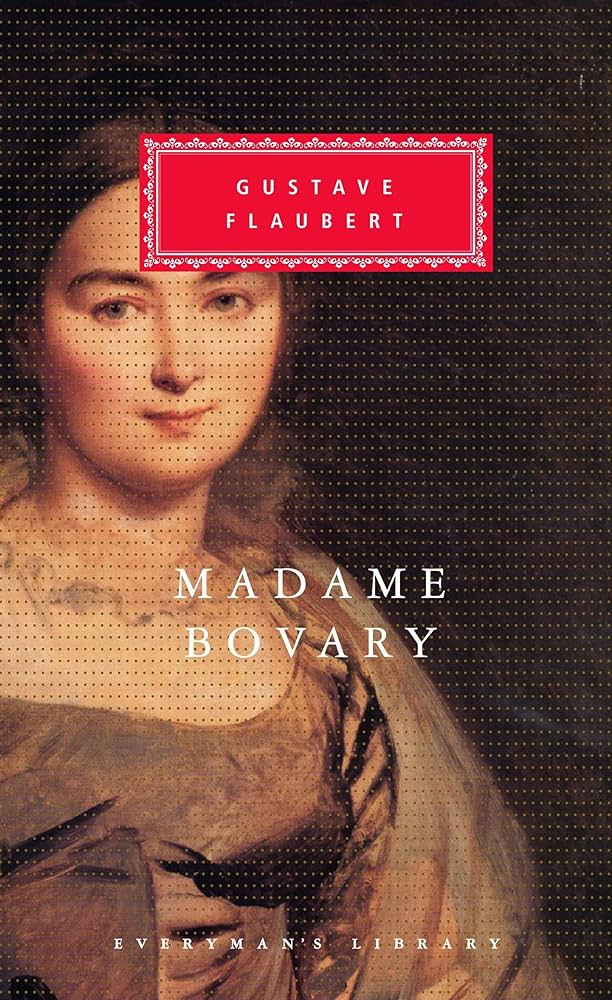
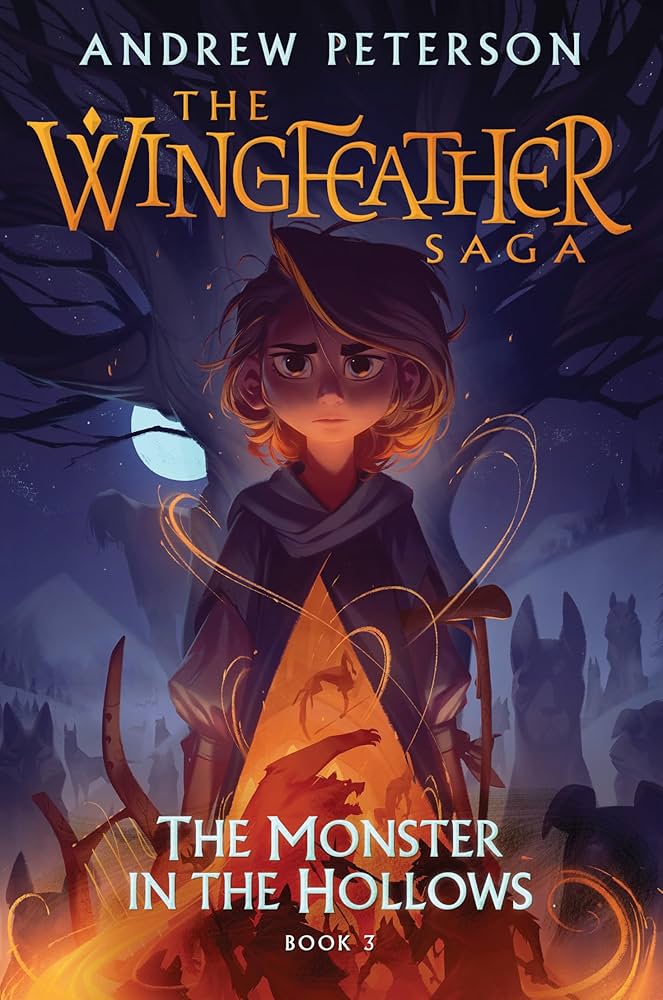
Today I look back on 3 novels: “One Corpse Too Many: A Novel of Suspense” by Ellis Peters, “Madame Bovary” by Gustave Flaubert, and “The Monster in the Hollows” (Part 3 of the Wingfeather Saga) by Andrew Peterson.
In 2024, reading “A Month in the Country” by J. L. Carr prompted me to read more novels; this British mystery featured a WWI veteran and art restorer working on a commission for a country parish church. In it, I grappled with griefs I felt alongside the characters. I reflected at the time: “[Novels] are a different kind of reading and a different kind of thinking. They anchor me in the timeless whilst non-fiction so often hurtles me relentlessly about the hectic now.”
Step out of the hectic now. No, I can’t pause time or slow it down or give you more of it, but in reading stories we can unpack what pains us or even project what may come of a current crossroads. What if I say no or yes? What if I give in? What if I start that? What if I resist? There are stories for that.
Ellis Peters – nom-de-crime of Edith Pargeter – in her 1979 “One Corpse Too Many” finds Brother Cadfael (her recurring monk/gardener/herbalist/healer/sleuth) and those of his abbey caught in the center of an English civil war. When a number of the enemy soldiers are executed near the monastery, the monks serve the dead so they are given a dignified burial and surrendered to their families when possible. The exacting eye of Cadfael notes one corpse that is not like the others because Cadfael exists outside the haze of the fratricide. Let this be our model when we are yet again beckoned to make angry sport online or elsewhere of our fellow creatures. Find “the signal in the noise” and attend to that.
Reading now two Ellis Peters books reminds me of high school where I first mentally befriended one of the “Queens of Crime,” D. L. Sayers, an early female graduate of Oxford University and the creator of the aristocrat-sleuth character Lord Peter Wimsey. In her books, I found the solace that many have before me in detective fiction: a sense of resolution and justice. In life, so many crimes are unsolved or “solved” in some gross way that is over-burdensome or under-burdensome and simply fails to rehabilitate the person in any meaningful way. Every few years I read most of my Sayers library as a palate cleanser and a reminder to probe, to ponder, to love.
I now turn to Flaubert’s “Madame Bovary,” which first appeared in installments in the later months of 1856 in “La Revue de Paris.” I read Francis Steegmuller’s translation from the French. According to Victor Brombert’s introduction to my copy, by 1857 Flaubert found himself in the law courts and subject to censure for “being offensive to religion and morality.”
Beyond my general opinion that law shouldn’t be in the business of censoring entertainment novels, the writer depicts every inevitable consequence from the behavior the courts likely found objective. The novel in its entirety is an answer to many challenges, and Flaubert, fortunately, was acquitted.
I picked up “Madame Bovary” for one of my favorite reading reasons: a friend was reading it, and I wanted to chat about it afterwards. I read my share of French novels in college (“Notre Dame de Paris” by Victor Hugo and “Père Goriot” by Honoré de Balzac and “La Dame aux Camélias” by Alexander Dumas the Younger*), but never this one.
I don’t know enough about Flaubert to thoughtfully analyze his motives for writing this, but it feels deeply cynical of the human condition. Like “The Great Gatsby” by F. Scott Fitzgerald, I simply found no one for whom to cheer. It might be a helpful thing to read with a younger married woman, someone still trying to find the balance of the great and the humdrum in marriage.
“You poor thing,” I thought of Emma Bovary. “You had no wise married friends in whom to confide.” We watch her long for these beautiful and ecstatic experiences in life and try to snatch them in the most wrong-headed of ways. She lived well beyond her means in all ways.
Hear this well, friends. There are a lot of simple, recurring pleasures in trying to be a good mom or dad, trying to be a good friend/lover/confidante to your mate, and trying to be good to those things or people near you: your garden, perhaps, and your neighbors. Emma Bovary missed the easy fruit of her life, if only she had thought to cultivate it with even a small measure of intentional care.
Fortunately, by contrast, we have the Wingfeather Saga, the dystopia I didn’t know I needed (despite a lone voice for years recommending it; sorry, Tim). Last month I alluded briefly to the first installment, but like with the “Ickabog” (Rowling), I’ve clambered clear past where I am reading in it to my children and hurtled like a rocket towards the end for myself, so I have made it to the 4th and final book and will herein talk briefly about the 3rd, “The Monster in the Hollows.” (This book killed me about three times; it was like reading Beth Moore’s great and difficult memoir “All My Knotted Up Life.”
There are so many possible spoilers that I must tread lightly, but Peterson aims for the epic and fantastic with nods to Tolkien, Lewis, probably some L’Engle, probably some Rowling, and probably some George MacDonald, knowing Peterson. If you like anything in that arena, you’d probably enjoy this. I’m flinging copies at other adults so I can discuss it excitedly and in overbearing volume.
Wingfeatherdom turns upon our core reality. When all feels muddled, “remember who you are.” The characters are frequently admonished in this fashion. Each of the children has a niche to walk that is essential to the family path.
Who are you?
I’m a daughter, born of descendants of English and German (and probably some other European nationalities) immigrants. I’m a firstborn, with the responsibilities that implies. I’m a sibling, with the possibilities that implies. I’m a wife, with the covenant that implies. I’m a mother, with all the wonder and cultivation bound up there. I’m a human, a deadly and wise creature marked with the stamp of God. I’m a worker, with things in my charge. I’m a neighbor with people in my charge. “But it’s too wonderful!” said Mary in the Jesus Storybook Bible as she accepted her commission.
It is all too wonderful. So, while the burdens may be heavy, the bills may be oppressive, the notifications may be obnoxious (just turn them all off), remember who you are. Tend your acre.
My friend Michael Thames just defended the dissertation “Echoes of music dim: Hard hope in J.R.R. Tolkien’s early heroic legends” out of the University of Otago, NZ. I haven’t read it because I’m not yet acquainted with the less-famous Tolkien texts he analyzes, but I did linger on the final sentence of the abstract: “Without claiming that Hope is the single key to Tolkien’s literature, the dissertation argues that it is one of its central sustaining threads, woven deeply into his early mythology and into his long labour to imagine sorrow, endurance, joy, and the possibility of a final Good End.”
Hold hope, my friends. Labor unto the Good End. And read more books.
*I’m pretty sure these were all in the same class. This is the sort of syllabus you get when your professor once fell in love with an Estonian woman on a Paris train and married her. What he did not do is teach the Library Research Paper.