Welcome to the first official edition of What Zoe Read, a regular column to share a selection of titles from across my various reading streams. I hope to encourage and accompany those who want to or already are seeking to scroll less and read more!
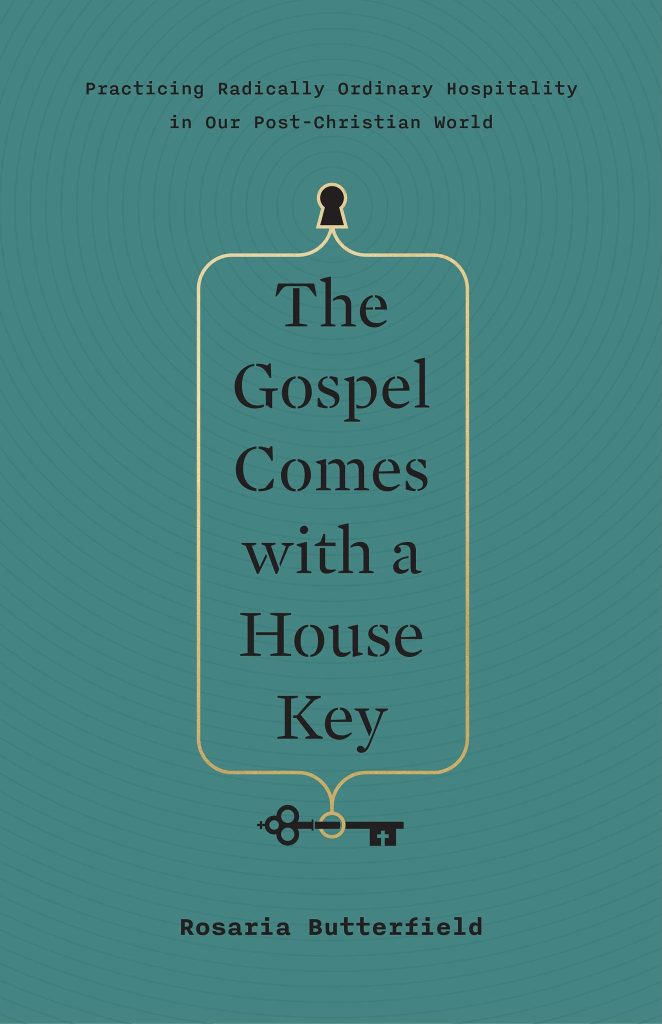
- “The Gospel Comes with a House Key: Practicing Radically Ordinary Hospitality in Our Post-Christian World” by Rosaria Butterfield (Crossway, 2018).
In the late aughts, my pastor Jeff Miller remarked in a sermon that whatever sort of place in which we lived could be the scene of life-giving hospitality. That was surprising, and encouraging news to me. Having only a tiny apartment or townhouse wasn’t disqualifying. And hospitality didn’t require fine china or an expensive spread. The years that followed enfleshed the concept further, with Jeff speaking story after story of little connections, talking to neighbors, making eye contact and sharing life even in a culture where we’ve all gotten trained to mind ourselves and shut the door.
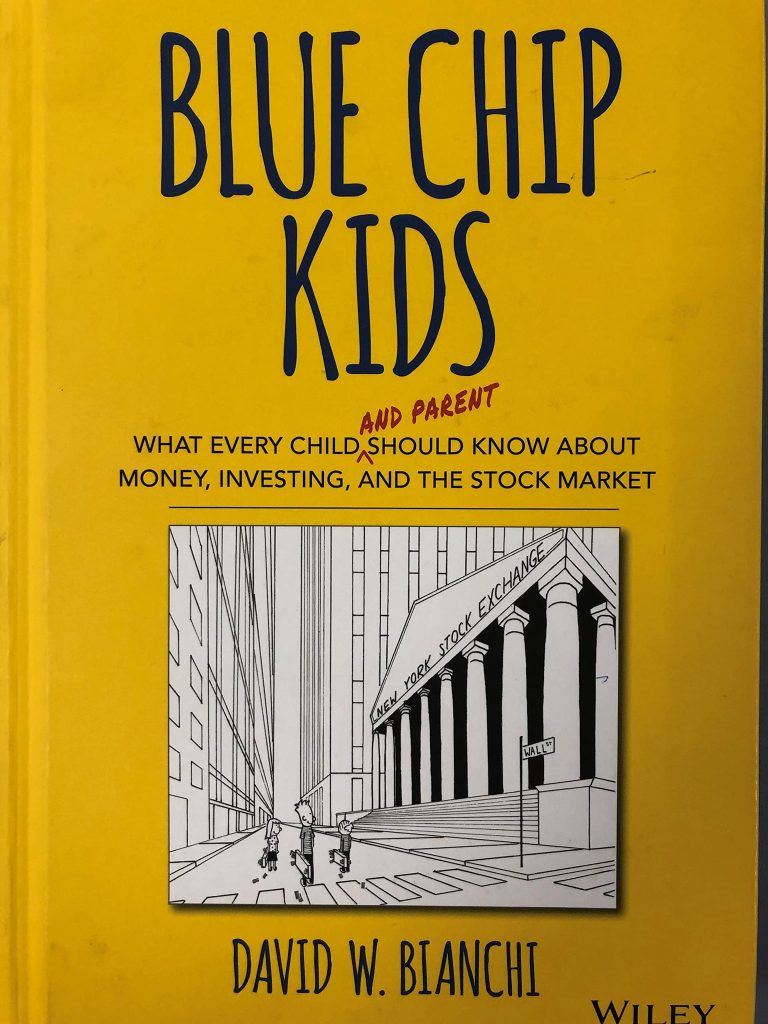
“The Gospel Comes with a House Key” unpacks with further gracious detail the way out of trying to live as an island. How to do neighborhood hospitality when your neighbor’s been busted with a meth lab and the police are everywhere and everyone is freaking out? Butterfield’s got a story for that. A PhD and former Syracuse professor in English and women’s studies, Butterfield attributes her slow conversion to Christianity in part to the extensive hospitality of a pastoral couple who got to know her over meals and conversations about theology in community. Out of that legacy, she shows the way, giving ideas for coming alongside the odd, the overwhelmed, the imprisoned, and others in practical ways. It rattled complacency in me in the best possible way. This much-requested book is available in limited quantities in the PINES library system. - “Blue Chip Kids: What Every Child (and Parent) Should Know About Money, Investing, and the Stock Market” by David W. Bianchi (Wiley, 2015).
This year I finally rolled over inactive retirement funds into an IRA so the money can start earning again. About half an hour into reading jargon and looking at investment options, I thought, “I need someone to talk to me about this like I’m 5.” Conveniently, our history curriculum had suggested this title, “Blue Chip Kids,” to accompany a unit on the early stock market days. Problem solved. Binachi wote this book for his teen, and got another teen to draw the cartoons. It was a fun, fast read, and it de-mystified some of my work ahead. (Next problem: everything I would most enthusiastically invest in is privately held! Send me your hot stock tips and mutual funds, all you little Warren Buffets.) This book is available in the PINES library system. - “La biblitoteca de Babel” (The Library of Babel, originally pub. 1941), a short story by Jorge Luis Borges. I read it s l o w l y in Spanish in the collection “Ficciones” (Fictions). Dr. Robert Sapolsky alluded to this story in a collection of his scientific essays I recently read. He is an atheist, but enjoyed this conception of the universe as an infinite library where people search for meaning. I refriended the Spanish-English dictionary that I carried two summers to classes in Spain to tackle this story. It turns out that I don’t know a lot of ordinary nouns like shelf and hallway. Here is a link to a website that explores the ideas of this story and includes an English translation. The works are plentifully available in the PINES Library system I think in both Spanish and English.
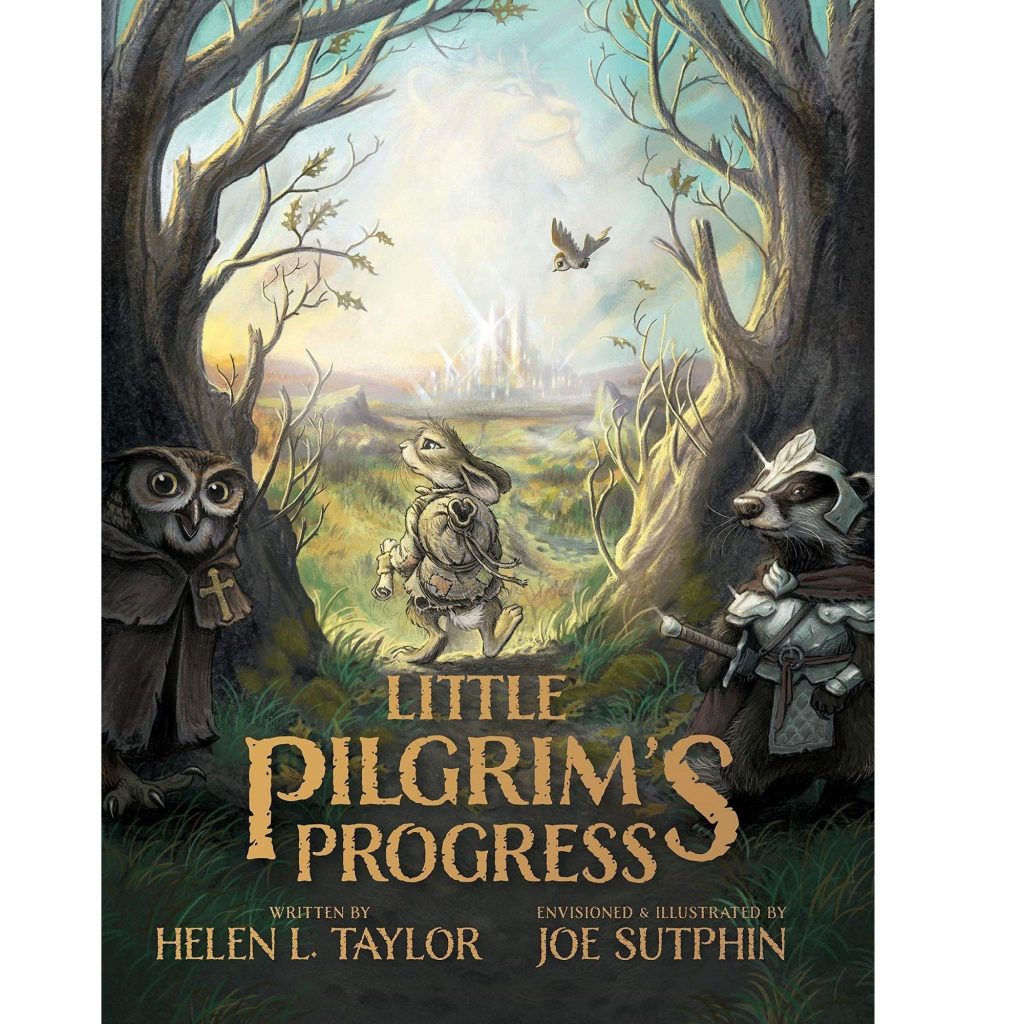
- “Little Pilgrim’s Progress” by Helen L. Taylor. This edition illustrated by Joe Sutphin is from Moody Publishers, 2021. John Bunyan introduced the world to his classic Christian allegory “The Pilgrim’s Progress from This World, to That Which Is to Come” in 1678. In the 20th century, Helen L. Taylor wrote an adaptation specifically for children. Reading “Little Women” recently incepted me to revisit “Pilgrim’s Progress” as Alcott makes numerous allusions to Bunyan’s work. This was a lovely read aloud experience. This book is available through the PINES library system. We bought ours through the Rabbit Room.
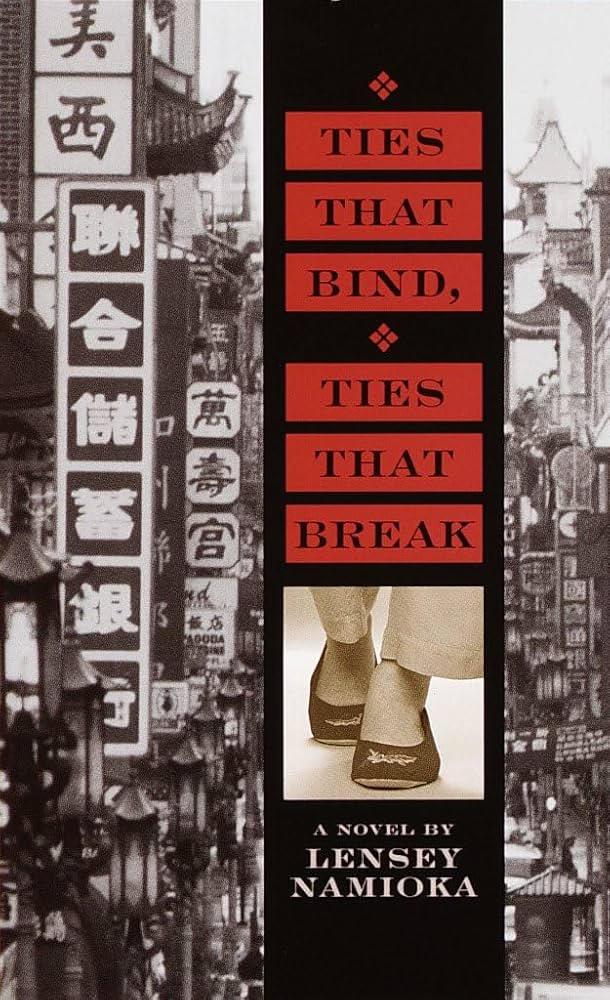
- “Ties That Bind, Ties That Break” by Lensey Namioka (Dell Laurel-Leaf, 1999).
As a child I read a youth novelization of some of the work of Gladys Aylward, a British evangelical Christian missionary to China in the early 20th century. There I learned that there was a long tradition of binding women’s feet from a young age. This practice kept the feet small and deformed. It went on for about a thousand years. The stronghold, as I understand it, really began to erode when the British Empire demanded of Cixi, the Empress Dowager, the outlaw of several Chinese traditional customs, including footbinding. This was in the era of the Boxer Rebellion. Historians may surely expand if appropriate in comments.
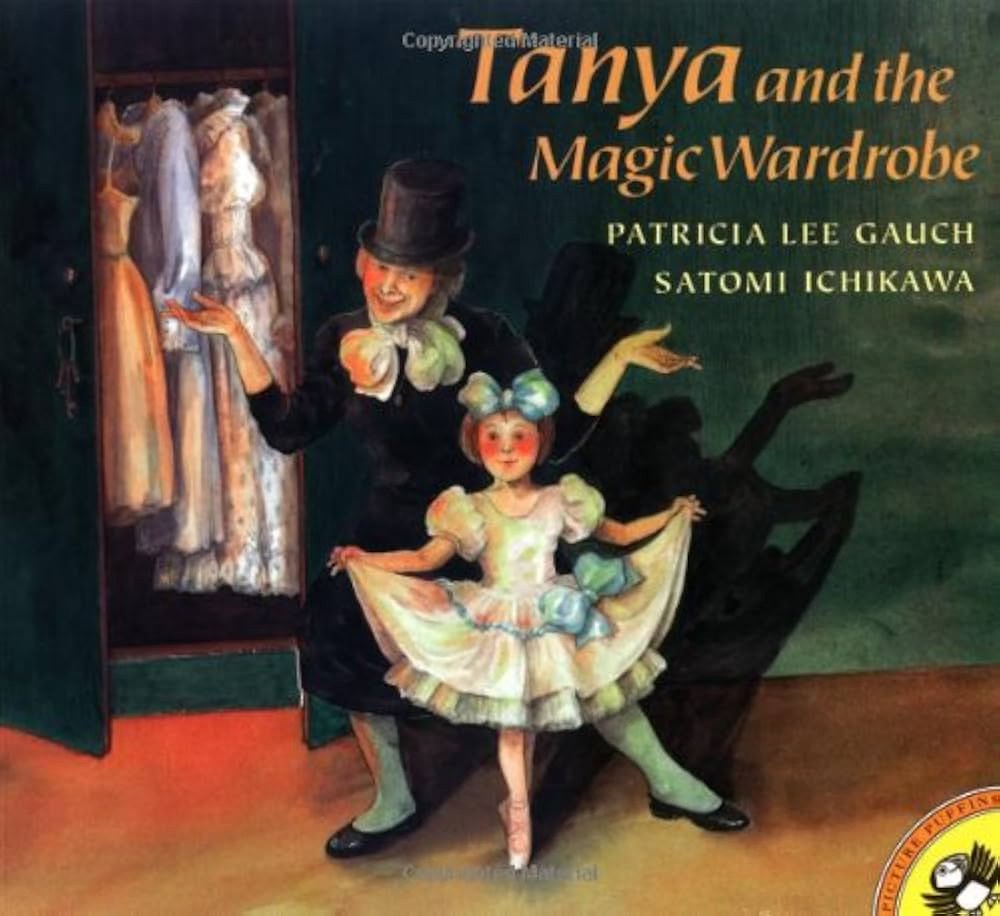
Namioka’s young adult novel, set in 1911, follows the trajectory of a Third Sister, Ailin, of a prominent family, the Taos. Despite immense family pressure Ailin refuses footbinding to the loss of a promised future engagement. She is able to receive some schooling and forges a new path as the nanny of a Western missionary family. This novel was chosen as a supplemental read aloud to accompany our history curriculum content. It is available in the PINES library system. - “Tanya and the Magic Wardrobe” from the Tanya series by Patricia Lee Gaunch (Philomel, 1997).
I’ve dabbled all over the dance/movement world in my 4 decades: ballet, competitive gymnastics, jazz, ballroom dance. My last consistent jaunt into lessons was about a year of Adult ballet over a decade ago. The Tanya series, which we picked up this volume of incidentally, features a little ballerina and teaches dance terms and references numerous ballets. In the story, Tanya is waiting early in the lobby for the show “Coppélia” and follows a wardrobe mistress for a little spin through costumes and the commonest French ballet terms. I had never heard of Coppélia, but enjoyed learning about it in this short YouTube video synopsis. If the character Dr. Coppelius with his invented life-size doll sounds a wee bit like the creepy Herr Drosselmeyer of “The Nutcracker,” it will probably not surprise you that the source writer for both is E. T. A. Hoffmann, a German Romantic writer. The Tanya book (and the others in the series, I assume) is available in the PINES library system.
Upcoming: “All Quiet on the Western Front,” “Animal Farm,” and more… happy reading!